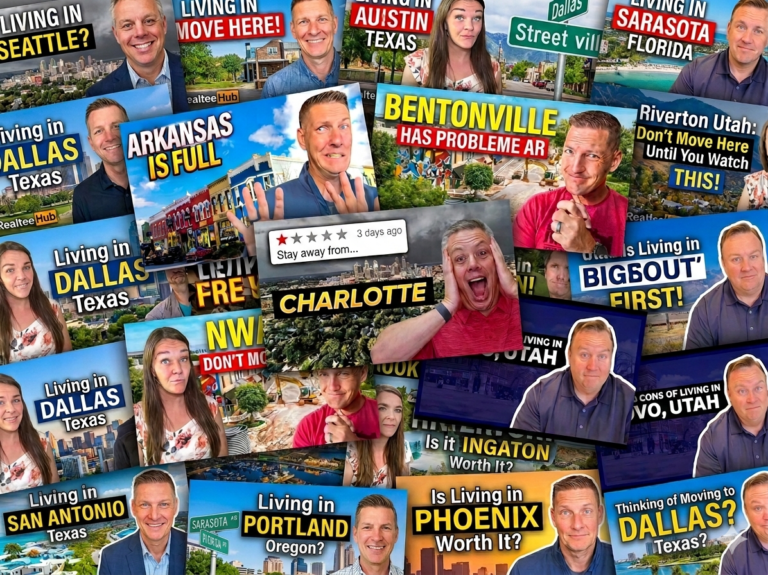
Every day, someone in the United States types “living in Austin Texas” or “best neighborhoods in Charlotte NC” into YouTube.
They’re not browsing. They’re not killing time. They’re researching one of the biggest financial decisions of their life, and they’re doing it before they’ve spoken to a single real estate agent.
This is the moment most realtors miss completely.
While the majority of agents are busy boosting Facebook posts, cold calling expired listings, and competing for leads on Zillow, a small group of forward-thinking realtors have figured something out. They’ve built YouTube channels that work for them 24 hours a day, 7 days a week, generating inbound leads from buyers who already feel like they know them before the first conversation even happens.
No cold outreach. No ad spend. No chasing.
Just the right video, showing up at the right moment, in front of the right person.
That’s what YouTube done right looks like for a real estate agent. And that’s exactly what this guide is about.
Whether you’ve never filmed a single video, you have a channel that isn’t getting traction, or you’ve been posting consistently but can’t figure out why the leads aren’t coming — this guide was written for you. We’re going to walk through everything. The strategy, the content, the optimization, the conversion, and the realistic timeline it takes to build something that actually works.
At RealteeHub, we’ve helped real estate agents build and manage YouTube channels that don’t just grow in subscribers — they grow in pipeline. One of our clients has built a channel of over 50,000 subscribers that consistently converts viewers into real estate leads every single month. Not through luck. Not through going viral. Through a deliberate, search-first approach that we’ll break down in full throughout this guide.
Let’s get into it.
Why YouTube Works Differently for Real Estate
If you’ve ever thought of YouTube as just a place to post videos, it’s time to reframe that completely.
YouTube is the second largest search engine in the world — second only to Google, which also happens to own it. Every single month, billions of searches are made on YouTube by people looking for answers, guidance, and information. And a significant portion of those searches? They’re about real estate.
But here’s what makes YouTube uniquely powerful for real estate agents specifically — it’s not just a search engine. It’s a trust-building machine.
Think about the person who just accepted a job offer in Denver. They don’t know the city. They don’t know the neighborhoods. They have no idea where to start. So they do what most people do — they open YouTube and start searching. “Living in Denver Colorado.” “Best neighborhoods in Denver for families.” “Cost of living in Denver 2025.”
They find a video. They watch it. They find another one from the same agent. They watch that too. Then another. By the time they’re ready to reach out to a real estate agent, they’ve spent hours watching this one person walk through neighborhoods, break down market data, and answer every question they had. That agent feels familiar. That agent feels trustworthy. That agent gets the call.
This is the relocation buyer journey and it plays out thousands of times every single day across every major city in the United States.
Now contrast that with a boosted Facebook post or a Zillow lead. Those are cold. The buyer doesn’t know you. You’re just another agent competing for their attention alongside five others who paid for the same lead. You’re starting from zero every single time.
YouTube flips that completely. By the time a viewer reaches out, you’re already their agent in their mind. The sale is practically made before the first conversation.
There’s another dimension to this that most agents don’t fully appreciate — the compounding nature of YouTube content. A blog post fades. A social media post is dead in 48 hours. A boosted ad stops the moment you stop paying for it. But a well-optimized YouTube video? It sits in search results and keeps pulling in views, and leads, for years. We have client videos that were filmed over a year ago still generating consistent inbound inquiries today. You make it once. It works forever.
This is the fundamental difference between YouTube and almost every other marketing channel available to real estate agents. It’s not interruption marketing — placing yourself in front of people who didn’t ask to see you. It’s discovery marketing — showing up exactly when someone is actively looking for what you offer.
That distinction changes everything.
The Search-First Strategy — The Foundation
Every piece of content strategy at RealteeHub is built on one core principle: Search-First.
It sounds simple. And in concept, it is. But most agents — and frankly most content creators in general — do the opposite without even realizing it.
Here’s what the opposite looks like. An agent decides to start a YouTube channel. They film a video about their recent listing. Then a market update. Then a “day in the life” video. Then something they saw another agent do that seemed to get good engagement. The content is scattered. There’s no thread connecting it. And most importantly, nobody was searching for any of it.
The Search-First approach starts from a completely different place. Instead of asking “what should I make a video about?” you ask “what is my ideal client already searching for?” You meet them where they are, not where you want them to be.
So who is your ideal client on YouTube? In most cases, it’s a relocating buyer. Someone who is moving to a new city — for a job, for family, for a lifestyle change — and is in the research phase of that move. They’re not casually browsing. They’re on a mission. They want to know what the neighborhoods are like, what the schools are rated, what the commute looks like, how much a home actually costs in the areas they’re considering. They’re spending hours on YouTube before they ever think about picking up the phone.
Your job is to be the agent whose videos they keep finding.
To do that, you need to understand how to find the keywords those buyers are actually typing. Here are the most effective ways to do it:
YouTube Autocomplete — Open YouTube in an incognito window and start typing “living in [your city]” or “moving to [your city].” Watch what autocomplete suggestions come up. Every suggestion is a real search that real people are making. Those are your video ideas.
Google Autocomplete — Do the same thing on Google. Since YouTube is owned by Google, strong Google search terms often translate directly to strong YouTube search terms.
AnswerThePublic and TubeBuddy — These tools visualize the questions people ask around specific topics. Type in your city name and you’ll get a map of every question, comparison, and search phrase people are using. It’s a goldmine for content ideas.
Look at what’s already ranking — Search your target keywords on YouTube and look at what’s coming up in the top results. Pay attention to the view counts. A video with 40,000 views on a specific neighborhood topic tells you there’s real demand for that content.
Once you have your keywords, the most important thing to understand is the difference between long-tail and broad keywords — and why long-tail almost always wins for real estate agents.
A broad keyword like “real estate investing” gets millions of searches. It also has millions of competing videos from huge channels with massive audiences. You will not rank for it. Not yet, and possibly not ever.
A long-tail keyword like “is Scottsdale Arizona a good place to raise a family” gets far fewer searches — but the people searching it are highly specific, highly motivated, and much easier to rank in front of. There’s less competition, higher intent, and a direct connection to what you offer as a local agent.
This is the core of the Search-First strategy. Go narrow. Go specific. Go local. Own a keyword, then own another one. Build a library of targeted videos that collectively dominate your market’s search results — one long-tail keyword at a time.
The agents who understand this are quietly building lead generation machines while everyone else is chasing views.
What Types of Videos Actually Generate Leads
Not all real estate videos are created equal. Some build audiences. Some get shares. Some go viral on occasion. But only a specific category of videos consistently generates real estate leads — and that’s the category we’re focused on.
Here’s a breakdown of the video types that actually work, and why.
“Living in [City]” Videos
This is the bread and butter of search-first real estate content, and for good reason. “Living in [City]” is one of the most searched phrases by relocating buyers. It’s broad enough to capture a wide audience but specific enough that the people watching it are genuinely considering a move to that city.
A strong “Living in [City]” video covers the real stuff — cost of living, neighborhoods worth knowing, things people love about the city, things that take some getting used to, schools, weather, job market. It’s honest, informative, and local. It positions you as the person who actually knows this city inside and out — not just as an agent trying to sell it, but as a genuine local guide.
These videos tend to rank well, accumulate views over time, and consistently attract buyers in the early research phase of their relocation journey.
Neighborhood Tour Videos
If “Living in [City]” videos cast a wide net, neighborhood tour videos are where you go deep. These are videos about specific areas within your market — a particular suburb, a downtown district, a family-friendly enclave. “Living in Tempe Arizona.” “Is Plano Texas a good place to live?” “Best neighborhoods in Nashville for young professionals.”
The beauty of neighborhood tours is that they attract buyers who are already narrowing down their search. Someone watching a video specifically about Plano, Texas is much further along in their decision-making than someone watching a general Dallas overview. They’re closer to picking up the phone.
These videos also compound beautifully. Build enough neighborhood content in a single city and you start to dominate that market’s search results across multiple keywords simultaneously.
Local Market Update Videos
Market updates serve a slightly different purpose — they build credibility and keep your existing audience engaged. A monthly or quarterly breakdown of what’s happening in your local market (median prices, inventory levels, buyer vs. seller conditions) positions you as the informed, data-driven agent in your area.
These videos don’t always generate direct leads immediately, but they do something equally valuable — they keep you top of mind with viewers who are watching and waiting. When that viewer is finally ready to make a move, you’re the agent they already trust with market data.
Relocation Guide Videos
“Moving to [City] — Everything You Need to Know.” These are longer, more comprehensive videos that cover the full picture of relocating to a specific area. They tend to perform well in search because they match the exact mindset of someone who has made or is seriously considering a relocation decision.
These videos work especially well when paired with a lead magnet — a free downloadable relocation guide that viewers can get in exchange for their email address. It’s one of the cleanest lead capture mechanisms available on YouTube.
FAQ and “Is [City] a Good Place to Live?” Videos
These are some of the most underestimated video types in real estate YouTube. Questions like “Is Phoenix too hot to live in?” or “Is Austin still affordable in 2025?” or “What are the pros and cons of living in Miami?” are searched constantly by people in the consideration phase of a relocation decision.
They’re easy to make, relatively easy to rank for, and attract highly motivated viewers who are genuinely wrestling with a decision. Answer those questions well and you become the trusted voice they turn to next.
What NOT to Make
This is just as important as knowing what to make.
Avoid trending content. A video reacting to a viral real estate news story might get a short burst of views, but it attracts a general audience, not your ideal client. It doesn’t rank for long-tail keywords. It doesn’t convert.
Avoid “day in the life” content until you have an established audience. It has its place eventually — it humanizes you and builds connection — but it generates almost no search traffic and should never be the foundation of a lead-generation channel.
Avoid posting listing tours as standalone content. A walkthrough of a specific property you’re selling has almost no search volume and a very short shelf life. Put your energy into content that works for years, not weeks.
The through-line across all the video types that work is simple — they answer a specific question that a specific type of person is actively searching for. Everything else is noise.
Setting Up Your YouTube Channel for Real Estate Lead Generation
Most real estate agents treat their YouTube channel setup as an afterthought. They pick a name, upload a profile picture, and jump straight into filming. That’s a mistake — because your channel itself is a searchable asset, and how you set it up determines whether YouTube understands who you are, who you serve, and where you operate.
Here’s how to do it right from the start.
Choosing Your Channel Name
Your channel name should immediately communicate two things — who you are and what market you serve. The most effective format for a real estate YouTube channel is simple: your name plus your city or region.
“John Smith | Phoenix Real Estate Agent” or “Sarah Johnson — Dallas Homes and Neighborhoods” both work well. Incorporating relevant keywords into your channel name — terms like “Real Estate,” “Homes,” or your city name — can significantly boost your search rankings and helps potential viewers immediately understand your channel’s focus. Carrot
Avoid generic names that don’t tell YouTube or your viewer anything about your market. “John’s Real Estate Channel” helps no one find you.
Writing a Keyword-Optimized Channel Description
Your channel description is one of the most overlooked SEO opportunities on YouTube. Most agents either leave it blank or write a vague paragraph about loving real estate. Neither works.
Your description should do three things: tell viewers exactly who you help, name your specific market, and include the keywords your ideal client is already searching. A strong channel description for a Phoenix-based agent might read something like:
“Welcome to [Channel Name] — your go-to resource for living in Phoenix, Arizona. Whether you’re relocating to the Phoenix metro area, exploring neighborhoods in Scottsdale, Tempe, or Chandler, or trying to understand the Phoenix real estate market, you’re in the right place. New videos every week covering neighborhood guides, relocation tips, and local market updates to help you make the most informed move possible.”
Notice how naturally keywords like “living in Phoenix,” “relocating to Phoenix,” “Phoenix real estate market,” and specific neighborhood names are woven in. Your description is an excellent opportunity to tell your audience who you are, what you offer, and why they should subscribe — while incorporating keywords naturally throughout to improve searchability. Carrot
Your Channel Trailer
Your channel trailer is the first video a new visitor sees when they land on your channel page. This is your one shot to convert a curious viewer into a subscriber — and eventually a lead.
Keep it short — 60 to 90 seconds is ideal. Tell them exactly what your channel is about, what kind of videos you make, and why those videos will help them. Speak directly to the relocating buyer. Something like: “If you’re thinking about moving to [City], this channel is going to save you months of research. Every week I put out videos covering the best neighborhoods, the real cost of living, and everything locals wish they’d known before they moved here.”
End with a clear call to action — subscribe, and watch a specific video you recommend.
Using Playlists as a Lead Nurturing Tool
Playlists are one of the most powerful and underused features on a real estate YouTube channel. When a viewer finishes one of your videos, a well-structured playlist automatically pulls them into the next one — keeping them on your channel, deepening their familiarity with you, and moving them closer to reaching out.
Playlists can help keep viewers engaged by offering a more structured viewing experience, encouraging them to watch multiple videos in a row. When creating playlists, consider the interests and needs of your target audience and organize your content in a logical, easy-to-follow manner.
For a real estate channel, effective playlist structures might include: “Living in [City] — Complete Guide,” “Best Neighborhoods in [City],” “[City] Real Estate Market Updates,” and “Moving to [City] — Everything You Need to Know.” Each playlist serves a different stage of the buyer’s research journey and keeps them engaged with your content longer.
Where to Place Your Call to Action
Every part of your channel should be working to convert viewers into leads — not just your videos. Here’s where your CTA needs to live:
Your channel description should include a link to your website, a free resource, or a calendar booking link right at the top — before the viewer has to click “show more.”
Every video description should include links to your website. If a video describes a specific neighborhood in your market, include a link that sends viewers to a page on your site with more detail about that community. Additionally, link to your social media accounts in the descriptions for all of your videos.
Your pinned comment on every video should repeat your primary CTA — whether that’s downloading a free relocation guide, booking a call, or visiting a landing page. A strong upload checklist includes a pinned comment with your main resource and a question of the day to drive engagement.
Finally, use end screens — the last 20 seconds of every video — to direct viewers to another relevant video or playlist. The goal is to keep them watching, keep them learning, and keep building the trust that eventually turns a viewer into a client.
Get the setup right and your channel becomes a professional, lead-generating asset from day one — not just a collection of videos.
How to Optimize Every Video for Search
Creating great content is only half the job. The other half is making sure YouTube and Google actually understand what your video is about — and show it to the right people. This is where most real estate agents leave enormous amounts of visibility on the table.
Here’s how to optimize every single video you publish.
Writing Titles That Rank AND Get Clicks
Your title is doing two jobs simultaneously — convincing YouTube’s algorithm to rank your video, and convincing a real human being to click on it. You need to nail both.
Your main keyword should naturally sit within the first 60 to 70 characters of your title, as that’s what appears in search results without getting cut off. Your title should still sound natural and compelling — it should not be misleading or manipulative, because this can hurt your rankings.
For a real estate channel, strong title structures look like this:
“Living in Austin Texas — What Nobody Tells You Before Moving” “Best Neighborhoods in Phoenix for Families (2025 Guide)” “Moving to Charlotte NC — Honest Pros and Cons from a Local Agent”
Notice the pattern. The primary keyword leads. A human hook follows. The viewer immediately knows what they’re getting and why it’s worth their time.
The single biggest mistake agents make is uploading videos without any keyword research or optimization — spending hours creating content and then leaving the title generic, the description empty, and the tags blank. This is like writing a brilliant book and never putting it on a shelf where anyone can find it.
Writing Descriptions That Work Hard
Your video description is one of the most powerful and most neglected SEO assets on YouTube. Think of it as a mini blog post that helps the algorithm understand your content — and helps the viewer decide whether to keep watching.
The first two to three lines are crucial as they appear before the “Show more” button, so place your main keywords here. After that, aim to add at least 200 or more characters that include your primary, secondary, and long-tail keywords. Jose Angelo Studios
A strong description structure for a real estate video looks like this:
— First 2-3 lines: What this video covers + primary keyword naturally included — Middle section: Expanded detail about the neighborhood, city, or topic covered — CTA: Link to your free resource, calendar booking, or website — Links: Your website, social media, related videos — Hashtags: 3-5 relevant hashtags at the bottom
If a video describes a neighborhood in your market, include a link in the description that sends viewers to a page on your site with more detail about that community. Additionally, link to your social media accounts in the descriptions for all your videos.
Tags, Chapters, and Thumbnails
Tags still matter — not as much as they once did, but they serve as additional signals that tell YouTube what your video is about and help it appear alongside related content. Use up to 15 video hashtags and at least 10 tags. Include your primary keyword and several related terms — channel or brand-specific tags also help establish authority over time.
Chapters — the timestamps you add to your video description — are increasingly important for both SEO and viewer experience. They tell YouTube the structure of your video and allow viewers to jump to the section most relevant to them. More time spent on your video signals quality to the algorithm.
Thumbnails don’t directly affect search rankings, but they dramatically affect click-through rate — and click-through rate absolutely affects rankings. Custom thumbnails drive 8 to 15 times higher click-through rates than auto-generated ones. For real estate channels, the most effective thumbnails include your face, the city or neighborhood name in bold text, and high-contrast imagery. Keep it clean, readable at small sizes, and consistent across your channel. Jamilacademy
One Often-Overlooked Signal: Your Video File Name
Before you upload a video, rename the file to include your target keyword. Instead of “VIDEO_20250312.mp4,” name it something like “living-in-austin-texas-2025.mp4.” It’s a small detail, but it provides an additional SEO signal to YouTube.
Posting Consistency as a Ranking Signal
This one surprises a lot of agents — but consistency itself is an optimization strategy. YouTube’s algorithm rewards upload consistency over total volume. Videos published consistently over 12 to 18 months almost always outperform 100 videos posted randomly. The agents who quit after 10 videos miss the ranking momentum that kicks in around month four to six. Jamilacademy
Pick a posting cadence you can sustain — whether that’s weekly or twice a month — and treat it like a business commitment. One well-optimized video per week for a year will outperform a burst of 20 videos followed by months of silence every single time.
Converting Viewers into Leads
Getting views is only valuable if those views turn into conversations. This is where a lot of real estate YouTube channels stall — they build an audience but never build a pipeline. Here’s how to bridge that gap.
Understanding the Viewer-to-Lead Journey
The typical YouTube viewer who becomes a real estate lead doesn’t watch one video and immediately pick up the phone. The journey looks more like this:
They find your video through search. They watch it. They find another one. They subscribe. Over the next few weeks or months, they watch more of your content. By the time they’re ready to talk to an agent, you’re the only one they’re thinking of.
Digital-native buyers dedicate anywhere from 3 to 18 months to research before contacting an agent — a timeline that makes long-term nurturing not optional, but essential. Ylopo
This is why building a library of content matters so much. The more videos you have, the longer a viewer stays in your world — and the stronger the relationship becomes before they ever reach out.
What to Offer — Your Lead Magnet
The most effective way to convert a YouTube viewer into a lead is to give them something worth exchanging their contact information for. In real estate, the most effective lead magnets for a relocation-focused channel are:
A free Relocation Guide for your city — a downloadable PDF covering neighborhoods, schools, cost of living, and what to expect when moving there. This is perfectly aligned with what your viewer is already researching.
A free Home Valuation for viewers who are selling before they relocate.
A free Buyer Consultation — a no-pressure 20-minute call to answer their questions about the market.
Mention your lead magnet in the video itself, put the link in the first three lines of your description, pin it in your comments, and add it to your end screen. Every touchpoint is an opportunity to move the viewer one step closer to a conversation.
Where to Capture Leads
Don’t send viewers directly to your homepage. Create a dedicated landing page specifically for YouTube traffic — one that speaks directly to the relocating buyer, offers your lead magnet, and has a single clear call to action.
A simple landing page that says “Thinking about moving to [City]? Download our free [City] Relocation Guide” with a name and email field will convert significantly better than a generic real estate website homepage. Landing pages featuring video convert up to 80% higher than text-only pages — so embed one of your best videos directly on that landing page for maximum impact.
Following Up Without Being Pushy
When a lead comes in from YouTube, remember — this person already knows you. They’ve watched your videos. They feel like they have a relationship with you before you’ve ever spoken. That changes the entire dynamic of the follow-up.
Agents who respond to web leads within 5 minutes are 21 times more likely to qualify that lead compared to those who wait 30 minutes. Speed matters — but the tone of that follow-up matters just as much.
Don’t open with a sales pitch. Open with a genuine conversation. “Hey, I saw you downloaded the relocation guide — are you thinking about making a move to [City]? Happy to answer any questions, no pressure at all.” That’s it. The trust is already there. Your job is just to open the door.
What to Expect — Timeline and Results
One of the most important conversations to have before anyone starts a real estate YouTube channel is an honest one about timeline. YouTube is not a fast channel. It is not a “post three videos and wait for the phone to ring” strategy. It is a long game — and the agents who understand that going in are the ones who actually win it.
Why Most Agents Quit Too Early
The pattern is painfully predictable. An agent gets excited about YouTube, films five or six videos, uploads them with decent optimization, and then checks the analytics two weeks later. Views are modest. Leads are nonexistent. They conclude that YouTube doesn’t work for real estate and move on.
What they missed is that they were exactly one or two months away from the algorithm starting to take notice.
YouTube’s algorithm rewards upload consistency over total volume. The agents who quit after 10 videos miss the ranking momentum that kicks in around month four to six. This is where most agent channels die — they publish six videos in three weeks, see modest views, and disappear for two months. By the time they come back, the algorithm has stopped showing their videos to anyone.
Month 1–3: Building the Foundation
This is the hardest phase because the results don’t feel proportional to the effort. You’re filming, optimizing, uploading — and the views are still small. This is normal and expected.
What you’re doing in this phase isn’t building an audience. You’re building a content library and signaling to YouTube that you’re a consistent, committed creator. Use this phase to refine your titles, experiment with thumbnails, and get comfortable on camera. The foundation you lay here determines how fast you grow later.
Month 4–6: Gaining Traction
This is where things start to shift. Videos that were sitting at 50 views start climbing. The algorithm begins to understand your channel’s topic and audience. You might start seeing your first organic inquiries — a comment asking for your contact information, a DM from someone researching a move. Once you rank well on Google or YouTube, you can generate leads passively, and people who find you via search are often closer to making a real estate decision. MoxiWorks
This phase is about doubling down on what’s working. If a specific neighborhood video is getting more views than others, make three more about that area. Let the data guide your next videos.
Month 7–12: Compounding Results
This is where the real estate YouTube channel starts to feel like a genuine business asset. Older videos are still pulling in consistent views and leads. New videos rank faster because your channel has established authority. Inbound inquiries are becoming a regular part of your week rather than a pleasant surprise.
The compounding nature of this phase is what makes YouTube so powerful compared to any other marketing channel. Every video you published in month two is still working for you in month twelve. The effort is sunk but the return keeps growing.
A Realistic Expectation
Most well-executed real estate YouTube channels begin generating consistent, qualified inbound leads somewhere between months four and eight. The exact timeline depends on your market competitiveness, posting consistency, optimization quality, and how well your content matches what buyers in your area are searching for.
What’s consistent across every successful channel we’ve seen: the agents who commit fully for 12 months without quitting don’t just get leads. They build a lead generation asset that works for years.
DIY vs. Hiring a YouTube Manager
At some point, every real estate agent who takes YouTube seriously asks the same question: should I be managing this myself, or is it time to bring in help?
The honest answer depends on where you are in your business — and what your time is actually worth.
When to Do It Yourself
In the early stages, doing it yourself makes sense for most agents. You need to learn your voice on camera, understand what resonates with your audience, and develop a feel for what works in your specific market. No manager can do that initial discovery for you.
If you have the time to film, optimize, and post consistently — and you’re willing to learn the basics of YouTube SEO — starting solo is completely viable. The barrier to entry is lower than most agents think. A smartphone, a decent lapel mic, and a ring light are enough to produce content that ranks and converts.
Signs You Need a Youtube Growth Partner
There’s a clear point at which DIY becomes a ceiling rather than a foundation. Watch for these signals:
You’re inconsistent because production takes too long. You’re posting sporadically because editing and optimization eat into client time. You know the strategy but can’t execute it at the volume needed to gain traction. Your channel is growing but you have no system for capturing and converting the leads it generates.
When any of these become true, the cost of not having help is higher than the cost of getting it.
What a YouTube Manager Actually Does
A good real estate YouTube manager isn’t just someone who edits your videos. The real value is in the strategy layer — keyword research, title and thumbnail optimization, content planning, analytics review, and making sure every video is built to rank and convert rather than just exist.
At RealteeHub, our process covers the full stack: identifying the high-intent keywords your ideal clients are searching, building a content calendar around those keywords, optimizing every upload for both YouTube and Google search, and tracking the metrics that actually matter — not views, but leads generated and conversations started.
The agents we work with don’t have to think about YouTube strategy. They show up, film their video, and hand it off. Everything else is handled.
What to Look for When Hiring
Not all YouTube managers understand real estate. Most don’t. When evaluating anyone to manage your channel, ask for specific examples of real estate channels they’ve grown — not lifestyle channels, not fitness channels, but real estate. Ask how they approach keyword research for a new market. Ask what metrics they track beyond subscriber count. Ask how they connect YouTube performance to actual lead generation.
The answers will tell you immediately whether you’re talking to someone who understands the business outcome you’re after — or just someone who knows how to edit videos.
The Compounding Advantage of Starting Now
Everything covered in this guide comes down to one core idea: YouTube rewards the agents who commit to it early and stay consistent.
The search-first strategy isn’t complicated. The content types that work aren’t a secret. The optimization principles are learnable. What separates the agents who build thriving YouTube channels from the ones who try and quit is simply the willingness to play a long game in a profession where most people are chasing short-term wins.
Every video you publish today is a permanent asset. It sits in search results, answers questions, builds trust, and generates leads — whether you’re working, sleeping, or closing another deal. The agent who started their YouTube channel six months ago is already ahead of the agent starting today. And the agent who starts today is already ahead of the agent who keeps waiting for the perfect time.
The compounding advantage is real. But it only belongs to those who start.
If you’re a real estate agent ready to build a YouTube channel that generates consistent inbound leads — or if you want to hand the entire process to a team that specializes in exactly this — RealteeHub is here to help. Book a free strategy call and let’s talk about what’s possible for your market.